
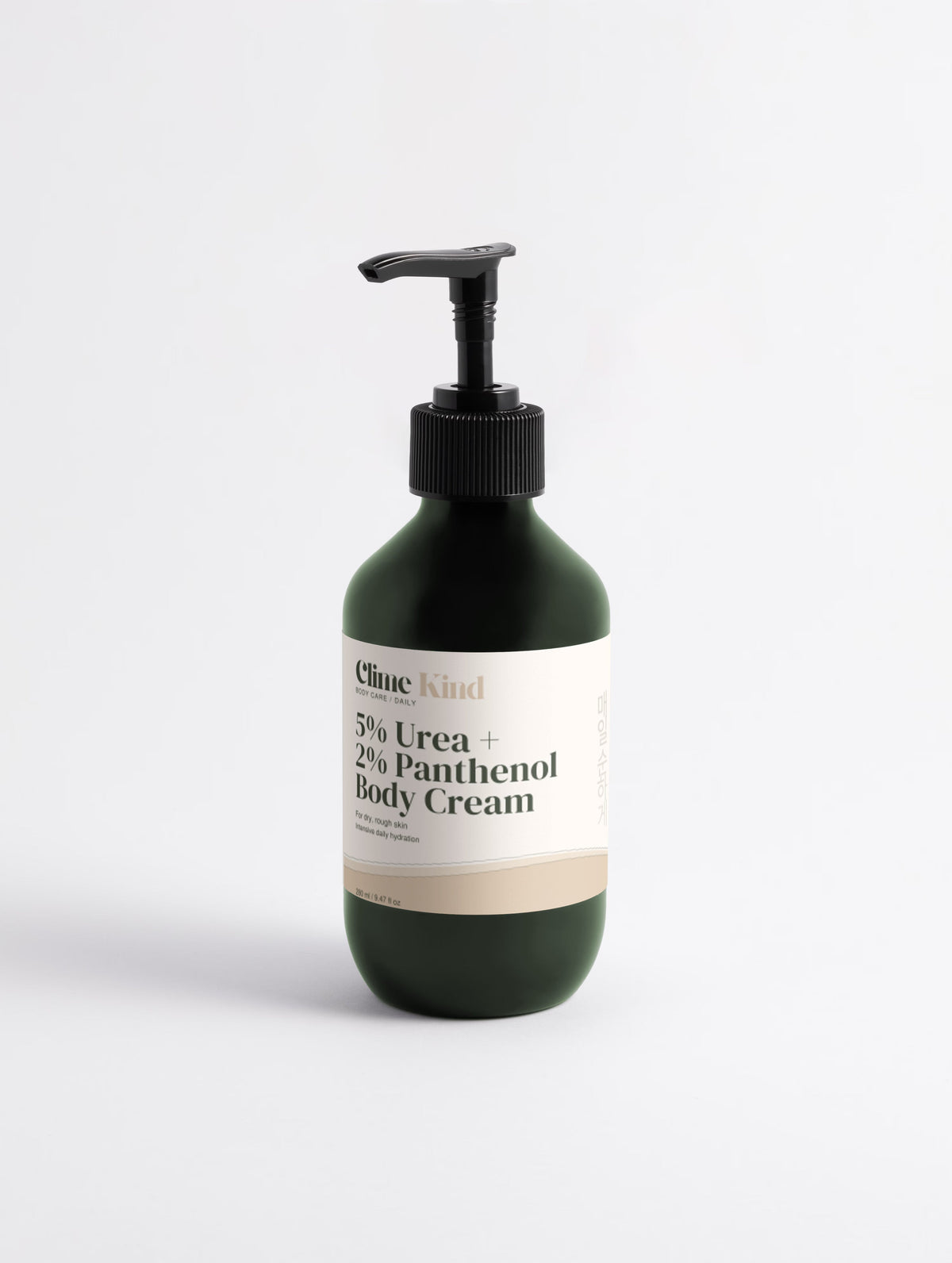
A body cream’s front label needs to be brief. The ingredient list has room for more of the story: the moisturising components, the oils that influence texture and the fragrance ingredients that may affect your choice.
Clime Kind’s 5% Urea + 2% Panthenol Body Cream is a useful example of why reading both sides matters. The product name is a starting point, but it should not be stretched into claims the finished formula does not make.
Read the exact urea ingredient name
The full list for 5% Urea + 2% Panthenol Body Cream names Hydroxyethyl Urea. That is the specific ingredient to use when describing the formula. Do not silently substitute plain urea or assume that every product using the word “urea” has the same function.
Here, the product is presented as a daily moisture step for dry-feeling body skin. It should not be treated as a clinical exfoliating urea cream, a treatment for a skin condition or a reason to scrub rough areas more vigorously.
The percentages belong to the product’s name and labelled blend. They do not let a reader calculate the exact concentration of every INCI ingredient or infer clinical results for this finished cream.
Look at the supporting moisturising blend
Glycerin, Sodium PCA and sodium hyaluronate appear alongside hydroxyethyl urea and panthenol. These are part of the formula’s moisture-focused approach. Sunflower seed oil and other emollient ingredients contribute to the soft, nourished skin feel.
DermNet’s guide to moisturisers explains the distinction between humectants that attract and retain water, emollients that soften, and occlusive ingredients that help limit moisture loss. A cream can bring those functions together instead of relying on one headline component.
Ingredient roles are useful context, but they are not finished-product trial results. They do not justify promising a fixed hydration duration or saying that a particular skin concern will disappear.
Give fragrance equal attention
The cream contains Parfum and a number of listed fragrance ingredients, including limonene, linalool, citral and benzyl salicylate. It is fragranced, even though the front name focuses on urea and panthenol.
If you have a known fragrance allergy or regularly find perfume uncomfortable on your skin, this is an important reason to consider a suitable fragrance-free alternative. The word “body” does not make an ingredient irrelevant to sensitivity.
The Clime Kind ingredient guide sets out which products are fragrance-free, which have no added fragrance and which contain perfume. Use the full current packaging list as your final reference, especially if you need to avoid a specific ingredient.
Turn the information into a useful choice
Decide whether you want a daily moisturising body cream and whether the entire formula suits your preferences and sensitivities. If so, follow the label: apply to clean body skin, focus on areas that feel dry, avoid the eyes and allow it to settle before dressing.
Introduce the cream gradually and stop if irritation develops. More product or more frequent application than directed does not follow automatically from a percentage on the front.
Reading beyond the label is not about memorising every chemical name. It is about noticing the details that change your decision and keeping your expectations matched to the actual product.

Leave a comment
This site is protected by hCaptcha and the hCaptcha Privacy Policy and Terms of Service apply.