
Morning and night moisturisers do not need to become two complicated skincare systems. Often, the useful distinction is how a texture feels at that point in your day: light beneath sunscreen and make-up, or richer when you are settling down for the evening.
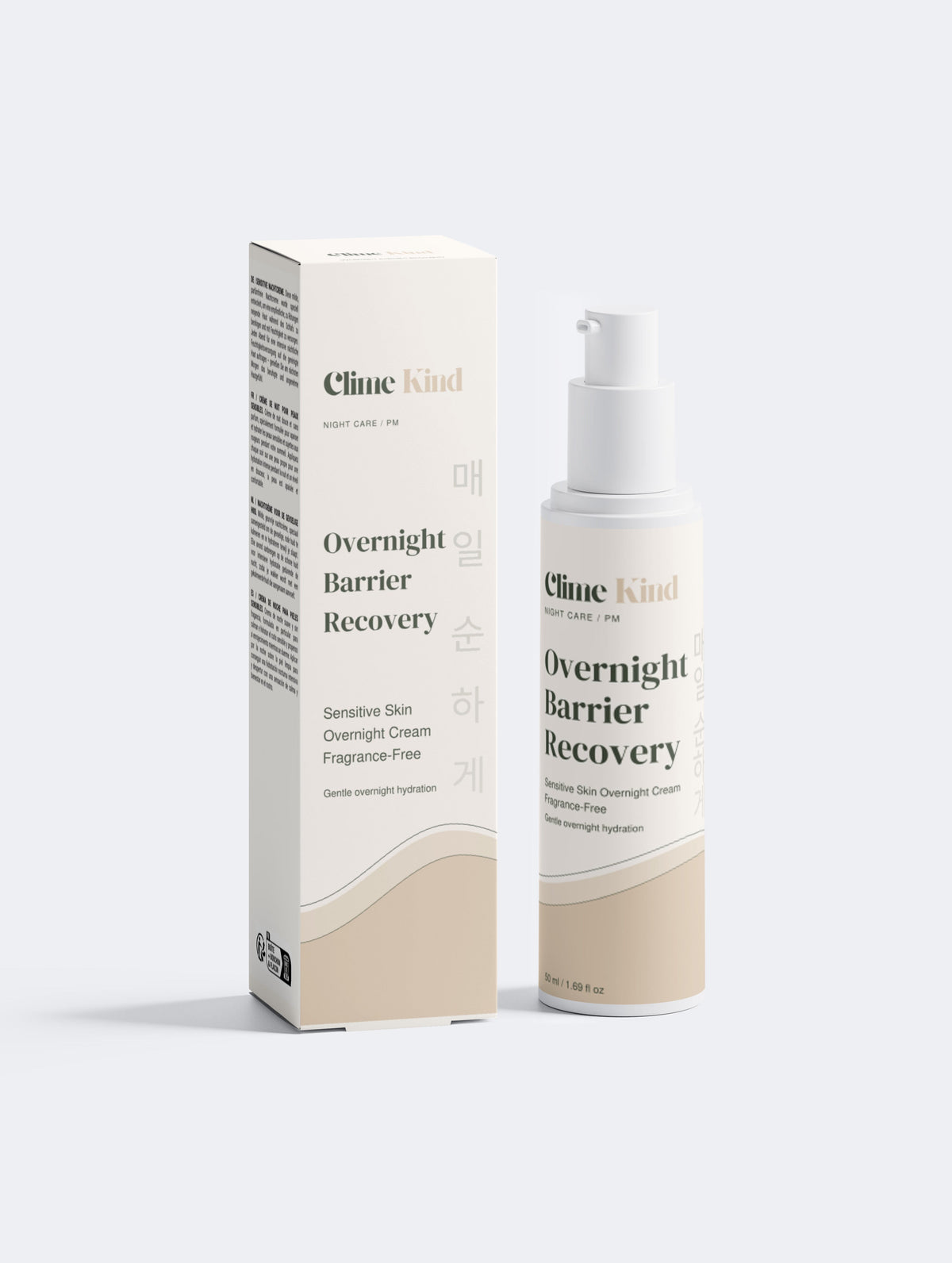
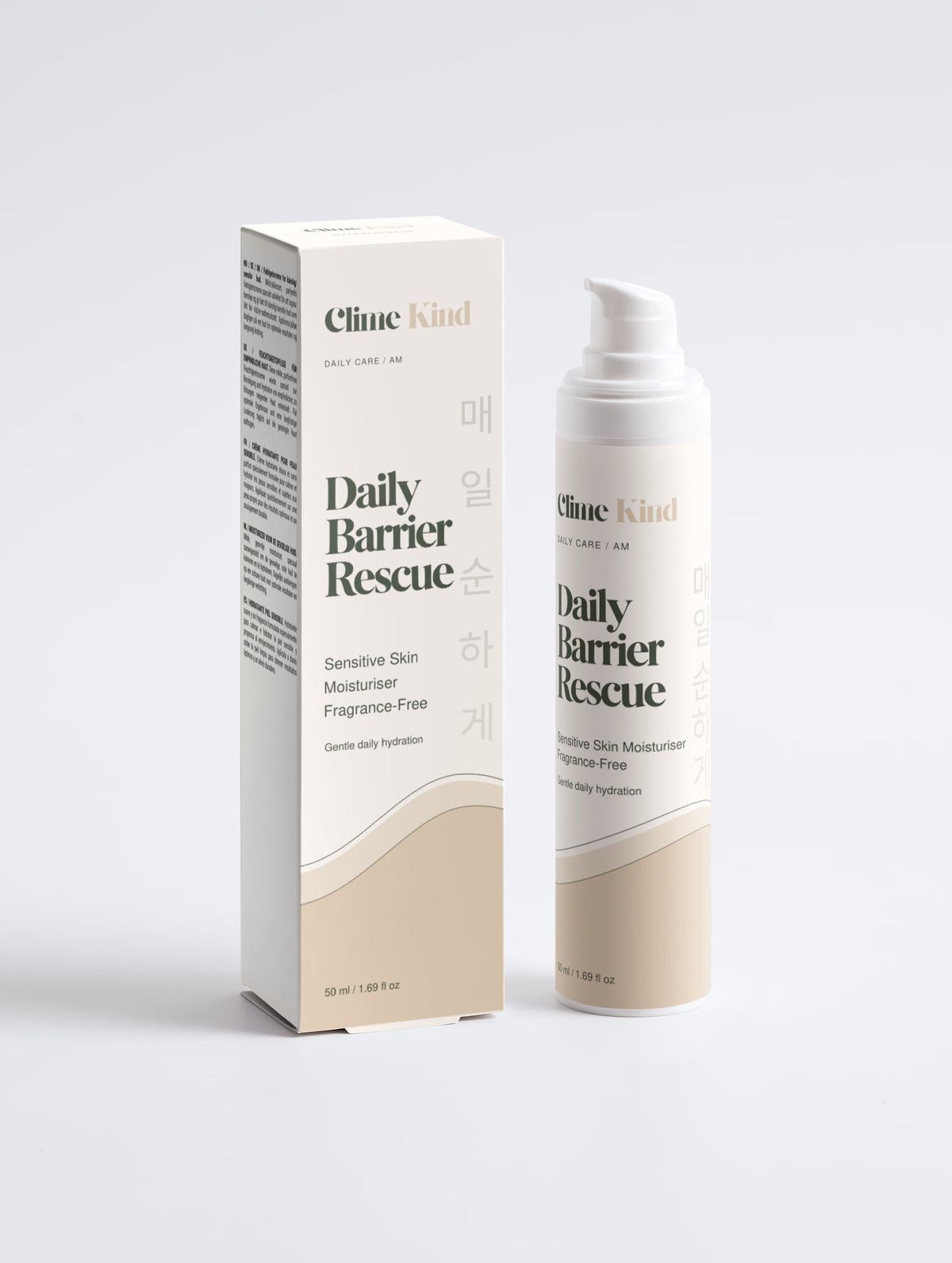
Clime Kind has two fragrance-free facial moisturisers with different textures. Choosing between them starts with your skin’s comfort, your current products and the gap you actually want to fill.
What the two creams have in common
Both Daily Barrier Rescue Moisturiser and Overnight Barrier Recovery Cream include aloe juice, glycerin, jojoba oil and forms of hyaluronic acid. Neither has added fragrance, and neither provides SPF.
The shared ingredients do different jobs within each finished formula. Glycerin and hyaluronic acid contribute humectant properties, while jojoba oil adds an emollient element. DermNet’s moisturiser guide explains why formulas often combine moisture-attracting, softening and moisture-loss-limiting ingredients.
That is more useful than treating one ingredient as the entire product. The feel and suitability of a cream depend on the whole formulation and the person applying it.
Choose a morning texture that fits what follows
Daily Barrier Rescue is the lighter option in the Clime Kind routine. Its label places it in the morning, smoothed over clean face and neck. Sodium PCA joins glycerin and hyaluronic acid in the hydration-focused blend.
Think about the rest of your morning rather than simply asking which cream sounds stronger. If you apply sunscreen and make-up, use a comfortable amount of moisturiser and give each layer time to settle. More layers are not automatically better, particularly when they leave your usual sunscreen awkward to apply.
Sun protection remains separate. A moisturiser without SPF cannot take the place of a sunscreen, even if it feels substantial or is described as barrier-supporting.
Choose an evening texture for a comfortable finish
Overnight Barrier Recovery has a richer character, with mango seed butter alongside jojoba oil and hydrating ingredients. Its directions call for one to three pumps on cleansed face, neck and décolleté in the evening.
This can make sense when you prefer a more nourishing-feeling final layer. It does not mean that everyone needs a heavy cream at night, or that the product has been shown to repair skin on a biological timetable.
If your existing evening moisturiser already feels comfortable, buying a second one solely because a routine diagram includes it may not add anything useful. The AAD’s advice on choosing moisturiser places emphasis on skin needs and texture rather than a universal best choice.
Make the decision with a short trial
- Choose the part of your routine that currently feels least comfortable.
- Introduce one moisturiser while keeping your other familiar products steady.
- Follow its label and check how it feels after application and later in the day.
- Leave optional toner or extra serums out while you assess that change.
Fragrance-free does not mean guaranteed tolerance, so test a small area before wider use and stop if irritation develops. The aim is a clear, repeatable routine: a texture that suits the morning, a comfortable evening finish, and no extra purchase without a reason.


Leave a comment
This site is protected by hCaptcha and the hCaptcha Privacy Policy and Terms of Service apply.